10 Years Later: Affordability vs Ability to Afford
Why Bene Esse is the Right Container for our Expanding Potential

A Better Question: What is Our Ability to Afford?
2016: Neighborhood Economics
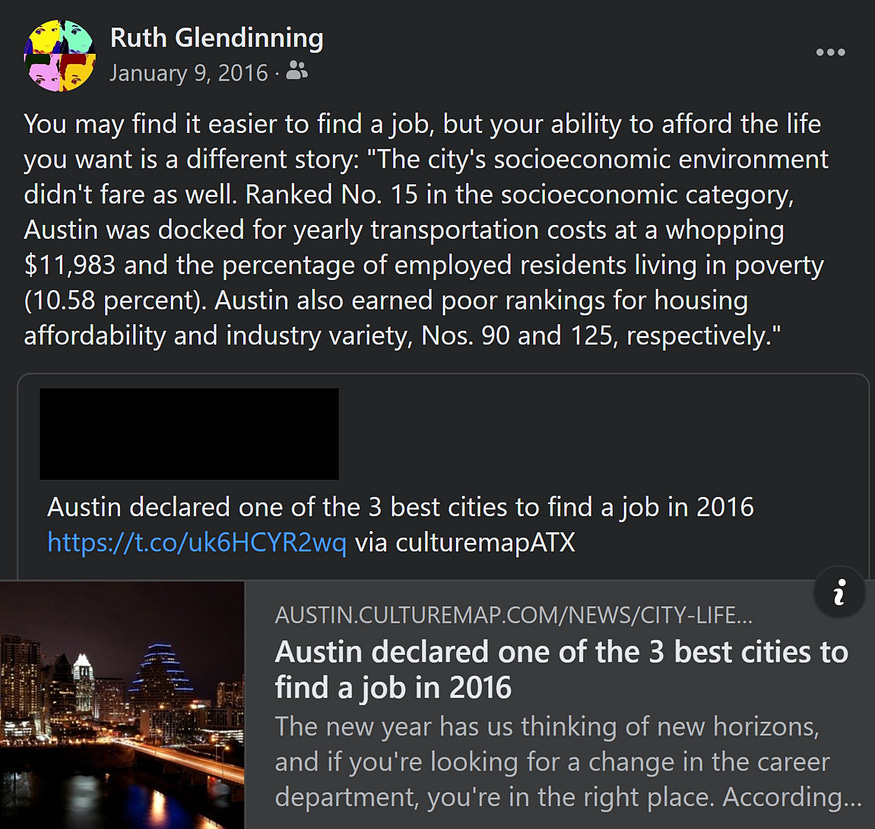
I began writing about flipping the script from ‘affordability’ to ‘ability to afford’ on the Neighborhood Economics platform in 2016, inspired by information like this:
2018: Flipping the Script
I revisited the question in 2018, with the core message:
…flipping the script from ‘affordability’ to ‘ability to afford’. At first glance these might seem to share a similar message. However, the former measures value from the outside based on averages and potentials; the latter speaks to changing the model to strengthen the individual’s ability to access more knowledge and options. Investing in people is always the best bet, it is where innovation is born and commitment to community resides. I don’t think it’s too late to rewrite the future of Austin, or any other city, however it is going to take community members to come together around shared values to demand a seat at the table. And, if they are denied, to make their own table and get on with the task of deepening their community roots, planting and growing the trees that will provide shade for generations to come. ~ Flipping the Script: From Affordability to Ability to Afford
2022: Making a Living vs Making a Life
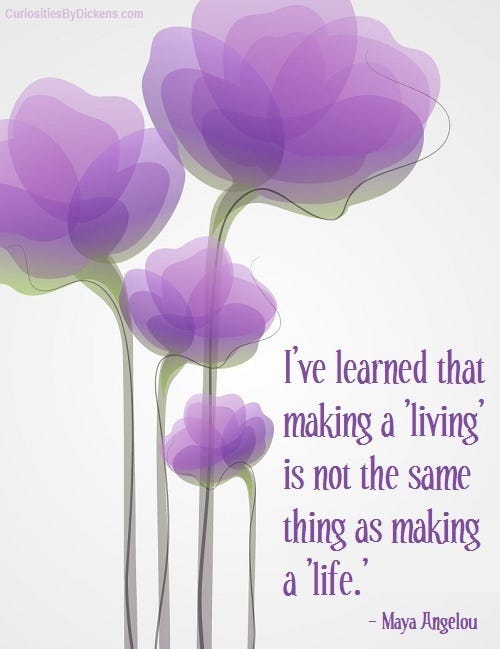
And again in 2022, when I reported from my own observations and experience pre-pandemic, that had become all too real for most everyone else on the ground since 2020. People finally had the time to ask and answer the question: Am I here to make a living, or make a life?
What is a life by design, and are we living one? Our destiny is in our hands, so how will we design it? So many people are living unfulfilled and totally frustrated lives because they are so caught up in the trap of making a living and have no real substance to life. Without creating the life we desire, we will not experience wealth, success, optimal health, empowering relationships, or wisdom.
We are all designers, architects, and creators of our ideal life’s design. However, designing and creating our ideal life is not a magical thing that happens on its own. It takes action and decisions. We must have personal accountability and the belief that we are in control of our lives and the decisions we make that shape our lives and create our path. ~ We Can Make a Living, or We Can Design a Life
2026: The City of Austin
These were the top stories on local NPR affiliate KUT on March 25, 2026:
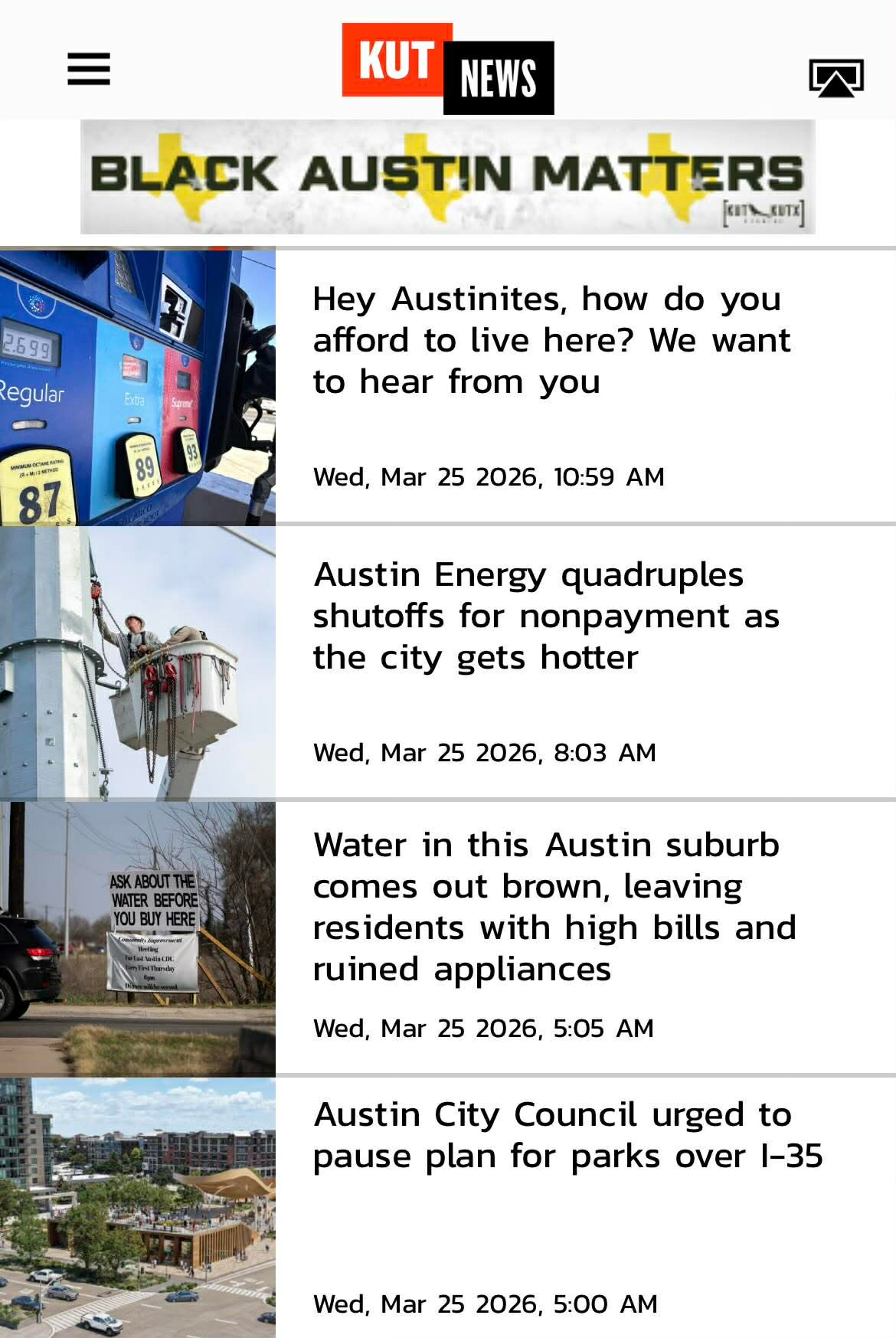
KUT is promoting a survey to begin looking at ability to afford as a truer way to frame the story…
Whether it’s more expensive gas or groceries, mortgage payments or rent, life in Texas is just getting harder to afford. So we here at KUT News want to know how you make it work.
Maybe you’ve cut back on shopping so you can afford day care. Maybe you just got a promotion. Maybe you’ve taken on more jobs to build up your savings. We want to hear from you for a series we’re working on that’ll look at how Texans are making ends meet these days.
Fill out the form below, and a reporter will get in touch with you to learn more about your situation. We won’t use any information you give us without your permission or sell it ... ever.
How do you make ends meet in Texas?
Whether it's more expensive gas or groceries, mortgage payments or rent, life in Texas is just getting harder to afford. So we want to know how you make it work.

Fill out this form so we can get in touch with you for some stories we're working on as told by folks who are trying to make ends meet in Texas. We won't publish any information you give us without your permission (or sell it to anyone). ~ KUT-Austin
Bene Esse is the Answer
It’s now 2026, a full decade since I first posed the story of ‘Flipping the Script’ and called out the difference between affordability and ability to afford. In that time, I’ve had the good fortune to work with Kent Dahlgren, Trudy Martinez, and Sophie Beilinson to develop Bene Esse, our answer to the questions we’ve been asking for all these years.
Why Bene Esse?
More Questions and Better Answers
“Affordable” for whom?
For years, top-down solutions have been tried to solve rising costs by making things cheaper:
Affordable housing
Subsidized utilities
Cost-of-living adjustments
But that treats affordability as a metric rather than a lived condition. Because the real question is not ‘Is this affordable?’ But, rather, ‘Do I have the ability to afford it consistently, sustainably, and without breaking or going broke?
And that ability depends on something deeper than price.
Are we economic placeholders or placemakers?
The modern economy reshaped the household in a quiet but profound way. It is no longer a place of production. It is a place where:
Income flows in from somewhere else
Expenses flow out continuously
Value is consumed, not created
This works as long as:
Income is stable
Costs are predictable
Systems function as expected
But when those conditions shift, the imbalance compounds. There is no internal buffer and limited capacity to adapt.
Where is the locus of control? Internal or External?
The increased cost of living is affecting every aspect of the household. It’s clearly measurable in dollars and cents, as seen in the rising number of evictions, utility shutoffs, overall infrastructure strain, and the resignation to financial precarity that is rampant in the existing system.
What if the household is not about consuming well-being, but actually producing it?
Instead of asking how to keep up with rising costs, a new question begins to take shape: How do we restore the ability to generate, exchange, and sustain life at the local level?
This is where Bene Esse begins.
How do we shift the story from consuming well-being to producing it?
Bene Esse shifts the frame:
Households become producers, not just consumers
Skills, care, food, services, and creativity are brought back into circulation
Soft capital is a key part of the community economy.
Value is generated within our own communities with a hyperlocal marketplace that keeps money local.
This is not just a nostalgic reimagining or a return to a simpler past; it is an adaptation to a more complex present.
We are repositioning the household as the engine of a sustainable economy. The conversations start at the kitchen table and play out in a community where your caring sense is as important as your dollars and cents.
Shifting from “From ‘Can I afford this?’ to ‘Can we sustain this?’
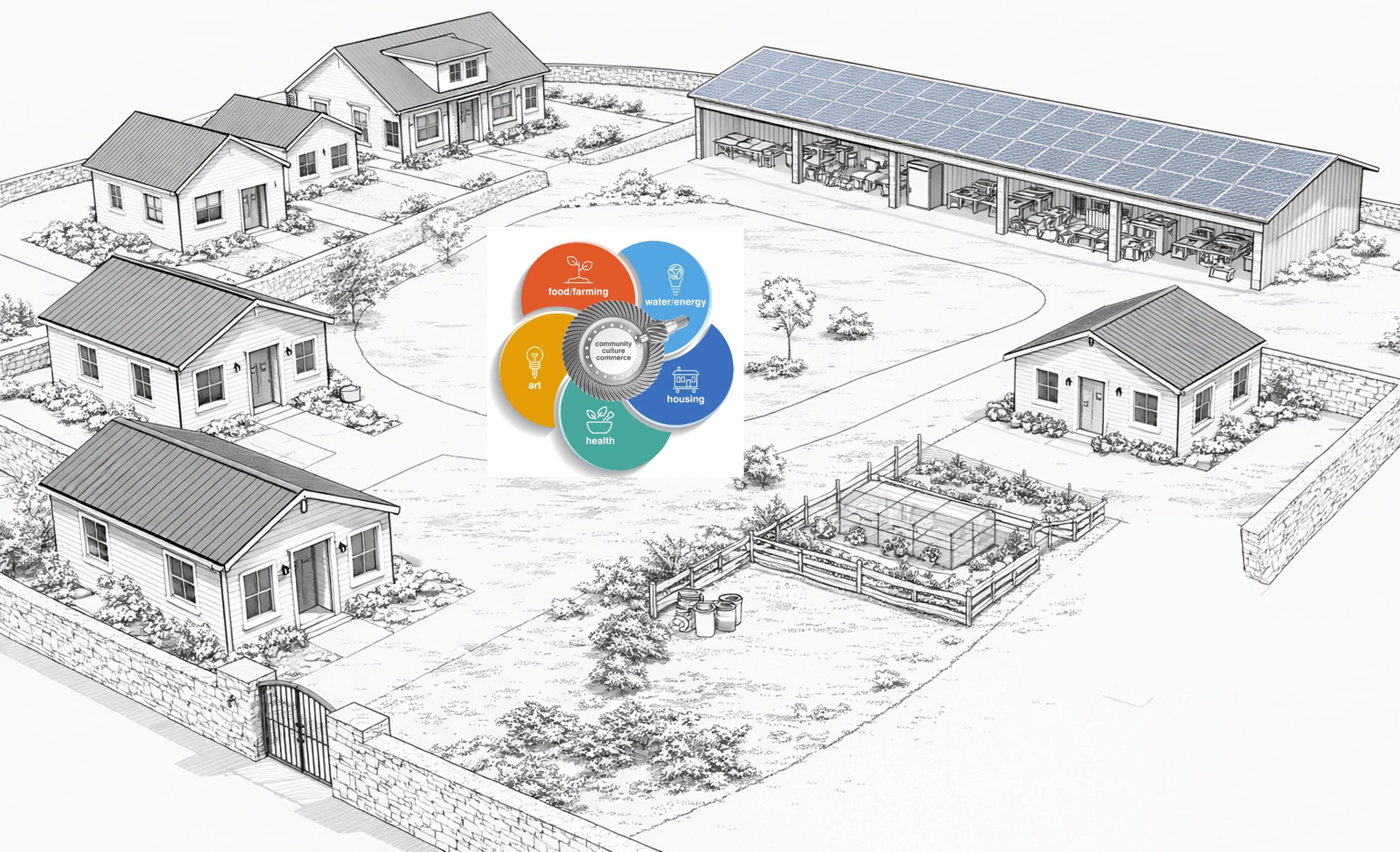
At the heart of Bene Esse is the Pod:
A small cluster of households
Sharing resources, skills, and production
Creating stability through relationships, not isolation
Within and between Pods:
Care can be exchanged
Food can be grown and prepared
Services can circulate
Income can diversify
Supported by a local marketplace layer, value begins to stay, circulate, and compound. Caring is the multiplier that changes the whole story.
We did not suddenly lose affordability. We reached the edge of a system that asked households to absorb more than they were ever designed to carry.
And in that moment, something else became possible.
Bene Esse: Rerooting the Middle Class
The old story was built on efficiency through separation. When every household has to purchase items separately, spend valuable time sustaining independence, and keep up with the Joneses to feel successful.
The Bene Esse story is different. It’s rewoven from what already exists, closer to home, and more human than before. Our message is deepened resilience through connection.
Kent Dahlgren, co-founder of Bene Esse and COO/CTO of Terra Global Developments, recently created a video telling our story:
So, I’ll end this with the most important question of all….
At this moment of transformation in our world, can we afford not to change?
For more information about Bene Esse…